

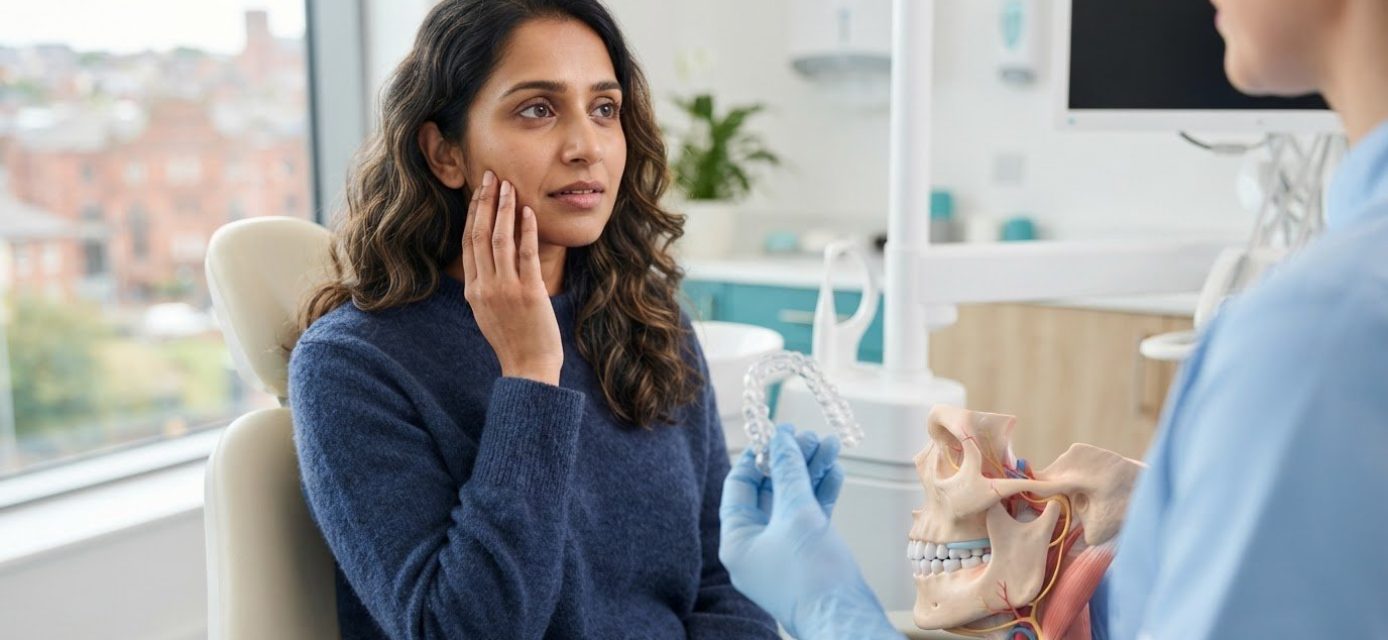
Could Invisalign be causing your jaw pain, or might the timing be misleading? If discomfort starts after changing aligners, it’s understandable to wonder whether continuing to wear them could make things worse. Invisalign and jaw pain can occur together, but soreness may have another explanation, so the cause isn’t always obvious.
Aligners apply pressure to move teeth, and a new stage of treatment can bring temporary tenderness. Discomfort around the jaw joint or muscles may feel different from pressure around particular teeth. Clenching, changes in how your teeth meet or an unrelated issue could also play a part. Only a dental professional can assess what’s behind your symptoms.
This guide explains possible causes without asking you to diagnose yourself. You’ll learn what to notice, which symptoms warrant timely dental advice and how to take a calm next step if the pain is persistent or concerning. Clear notes about your symptoms can help you discuss your comfort and treatment progress with your dentist.
Discomfort while wearing Invisalign can be unsettling, particularly if you’re unsure whether it comes from your teeth, jaw muscles or the joint itself. The timing may be relevant, but it doesn’t prove that the aligners are responsible. Noting where you feel the discomfort and what everyday activities affect it can help you explain it clearly to your dentist.
Jaw pain is discomfort in or around the lower jaw, the joint that allows it to move, or the muscles involved in chewing. It may feel like an ache, tightness or tenderness. Pressure focused on one or more teeth can feel different, for example when biting or touching those teeth, rather than around the joint or across the muscles. These descriptions can guide a conversation, but they can’t establish the cause.
Aligners are designed to apply pressure as teeth move, so localised tenderness around particular teeth can occur. That sensation alone doesn’t confirm that treatment is progressing as intended or identify a problem. Jaw discomfort may be described as an ache near the joint, tightness in the cheeks or temples, or soreness when chewing. The distinction isn’t always clear, so don’t treat it as a diagnosis.
Notice the pattern rather than trying to label it. Is the feeling centred on a tooth, or does it spread across the side of your face? Does it appear mainly when you bite, yawn or open your mouth? Did it start after a new aligner was fitted, or does it persist regardless? These details can help your dentist consider your comfort alongside your treatment progress.
The jaw joint sits just in front of each ear, where the lower jaw connects to the skull. Discomfort there may be felt when opening or closing your mouth. Tension can also affect the chewing muscles in your cheeks or temples. Clicking, tightness or restricted movement may have different causes, so none of these symptoms alone confirms a joint condition or an aligner-related cause.
Your bite may also be part of the wider picture. Malocclusion describes a misalignment in how the teeth meet. Tooth contact can change during orthodontic treatment, but a change in your bite doesn’t automatically explain pain or mean Invisalign is the cause. Your dentist can consider these details alongside your symptoms and treatment stage.
Jaw pain has several possible causes and cannot be diagnosed from symptoms alone. Contact your dentist for advice if discomfort is persistent, worsening or affecting eating or opening your mouth. Seek prompt professional guidance if movement becomes notably restricted or pain is severe. Until you’ve discussed it, don’t assume that either continuing or stopping aligner wear is the right response for you.
If discomfort appears during treatment, it’s natural to look for a connection. An aligner applies gentle pressure to guide teeth towards planned positions, and a new one may feel different from the previous tray. But the timing alone doesn’t prove the aligners caused the pain. Your symptoms, bite and jaw habits all provide useful context.
A new aligner may create pressure around teeth as they respond to planned movement. You might notice tenderness in one area or find that chewing feels unfamiliar. These sensations vary from person to person. They don’t automatically indicate a problem or confirm that the aligner is responsible for pain elsewhere in the jaw.
As teeth move, the way your upper and lower teeth meet can also change during treatment. Certain contacts may feel more noticeable when you bite or chew. Describe any change, but don’t assume it has caused a jaw-joint disorder or lasting damage. Your dentist can consider whether it fits your treatment stage and overall symptoms.
Jaw muscles can become sore for reasons that aren’t directly related to tooth movement. Clenching or grinding, including habits you may not notice during sleep, can place strain on the teeth and muscles. Waking with a tired or tight jaw, clenching during concentration or noticing your teeth pressed together during the day are useful observations to share, not proof of a particular cause. In some cases, wider tension through the neck and upper body can also play a role, with wellness studios such as Livelovelife Chiropractic focusing on gentle care to help address postural and musculoskeletal strain.
You may also have a pre-existing jaw-joint concern or another dental issue. Tooth, muscle and joint-related discomfort can overlap, making it difficult to identify the source by sensation alone. Where persistent clenching or physical tension is influenced by broader stress or lifestyle factors, holistic wellness clinics such as Westridge Holistic medicine emphasise root-cause care to support whole-body health alongside dental evaluation. If you had jaw symptoms before starting Invisalign, or if discomfort persists, worsens or affects eating or opening your mouth, arrange a discussion with your dentist rather than assuming it is a routine part of treatment.
Note what was happening when the discomfort began. Record whether it followed a change of aligner, where you feel it, which movements or meals affect it, and whether you’ve noticed clenching or grinding. This gives your dentist a clearer picture than the label “jaw pain” alone. If a tray feels difficult to wear or symptoms are concerning, seek personalised dental advice rather than changing your wear routine on your own.
At Khan Dental, an Invisalign discussion can cover your symptoms, treatment progress and comfort, without presuming the cause.
It’s tempting to choose an orthodontic treatment based on the promise of greater comfort, but broad comparisons can’t predict how your teeth, jaw muscles or joints will feel. Invisalign and braces both guide teeth towards planned positions, and either may involve pressure as movement takes place. Jaw discomfort is different from tenderness around teeth, so consider the type of sensation, not just the appliance.
Claims that one method feels more comfortable overall can’t establish how a particular person will respond. Aligner pressure may be noticeable around teeth, while braces apply force through a fixed appliance. Neither comparison tells you whether you’ll develop jaw-joint or muscle pain. Comfort depends on individual clinical circumstances and can’t be predicted from the treatment label alone.
| What to compare | Invisalign | Braces |
|---|---|---|
| Appliance type | Removable clear aligners | Fixed brackets and wires |
| Pressure sensation | May be felt around teeth as aligners guide movement | May be felt around teeth as adjustments guide movement |
| Jaw symptoms | Joint or muscle discomfort needs individual consideration | Joint or muscle discomfort also needs individual consideration |
| Useful discussion | Describe symptoms alongside aligner wear and treatment stage | Describe symptoms alongside adjustments and treatment stage |
This is a broad guide, not a ranking of comfort or suitability. Tooth pressure may be noticeable with either approach, while jaw symptoms could relate to factors beyond the appliance. For more context on clear aligner treatment, read Khan Dental’s information about Invisalign treatment in Liverpool.
Persistent, worsening or disruptive discomfort deserves a review rather than a decision to change treatment independently. Your dentist can consider your symptoms alongside your bite and treatment progress. This keeps the conversation focused on your circumstances, rather than assuming that switching appliance type will prevent or resolve pain.
Before an appointment, note when symptoms occur, what seems to bring them on and whether they affect chewing, speaking or opening your mouth. Mention if the pain began after a treatment change, while recognising that timing alone doesn’t establish a cause. Clear observations can help your dentist decide what needs closer attention and how comfort fits into the next steps of your care.

If Invisalign and jaw pain occur together, note what has changed rather than trying to work out the cause yourself. A clear record can help your dentist understand the pattern and consider it alongside your treatment. You don’t need to monitor every sensation, but a few practical details can make the conversation more useful.
Write down when the discomfort began and whether it appeared after starting a new aligner. Describe where you feel it, how strong it seems and whether it comes and goes or stays present. Notice what makes it better or worse, such as chewing, yawning or opening your mouth, and whether it affects meals or sleep.
Other observations can help build a fuller picture. Note any clicking, locking, headaches, jaw tiredness on waking or signs that you’ve been clenching. These details don’t point to a diagnosis on their own, but they give your dentist a more precise account than “my jaw hurts”. Bring your current aligner and any treatment information you have, especially if the timing seems linked to a change in your routine.
Don’t force your jaw open or repeatedly test a movement that hurts. Avoid changing the prescribed aligner schedule on your own, including stopping, skipping or moving ahead to another tray. If wearing an aligner is difficult or symptoms are concerning, contact your dentist for personalised guidance.
Arrange a dental review if pain persists, gets worse or starts to interfere with eating, speaking or opening your mouth. Contact a dentist promptly for severe or rapidly worsening pain, facial swelling, an injury to the jaw or difficulty opening your mouth. If you can’t open your mouth, or your jaw feels locked, seek urgent assessment rather than trying to manoeuvre it yourself.
Use the effect on your daily life as a guide, not as a way to diagnose the problem. Mild, brief tooth tenderness and pain that limits normal jaw movement are not interchangeable experiences. If you’re unsure how quickly you need advice, explain your symptoms and their effect on everyday activities when you contact a dental professional.
Keep your appointment notes concise: when the pain began, where it is, how severe it feels, what triggers it and whether eating or jaw movement has changed. Mention whether it followed an aligner change and anything you’ve noticed about clenching, sleep or clicking. This supports a focused conversation about your comfort and treatment progress without assuming Invisalign is the cause.
If you’re experiencing discomfort during treatment, discuss your Invisalign concerns with Khan Dental so your symptoms and treatment progress can be considered together.
Jaw discomfort can make it difficult to feel at ease with treatment, but raising the concern is a sensible part of looking after your comfort. It doesn’t automatically mean you need to stop Invisalign. A conversation with your dentist can bring your symptoms and treatment progress into the same picture, so any next steps take your circumstances into account.
At Khan Dental, Dr Khan can discuss your Invisalign concerns as part of your care. The aim is not to assume aligners are responsible or promise a particular diagnosis, but to understand what you’re experiencing and consider it in context. Describe what feels different, what you’re worried about and how the discomfort is affecting your day.
The conversation can start with your symptoms and their effect on daily life. Your dentist may consider when the pain occurs, whether eating or opening your mouth is affected, and how this relates to your treatment stage. Aligner fit, progress and relevant dental history may also be part of the discussion, depending on your circumstances. No single symptom guarantees a specific investigation or outcome.
You don’t need perfect words to describe what you feel. You might mention an ache near the ear, tension when chewing or pressure you can pinpoint to certain teeth. Everyday descriptions can help explain the experience without needing to decide whether it comes from a tooth, muscle or joint.
Bring concise notes about when the discomfort began, what seems to change it and whether it has improved, stayed the same or worsened. Include any effects on chewing, sleep or opening your mouth, along with clicking or clenching you’ve noticed. If useful, bring your current aligner and treatment information so the discussion can include where you are in your plan.
Consider asking how your symptoms relate to your individual treatment plan and what signs should prompt you to get back in touch. You can also explain what would help you feel more comfortable and informed as treatment progresses. A clear conversation gives you space to address concerns without assuming the cause or making treatment decisions alone.
For broader context about the approach and what Invisalign treatment in Liverpool involves, explore Khan Dental’s Invisalign treatment information. It can help you prepare questions, while a discussion with your dentist keeps the focus on your own experience.
If Invisalign and jaw pain are causing concern, discuss your Invisalign concerns with Khan Dental. Sharing what you’ve noticed is a calm, informed next step that allows your comfort to be considered alongside treatment progress.
Discomfort can leave you second-guessing your treatment, but you don’t have to work it out alone. A thoughtful conversation can help you explain what you’ve noticed and consider how it fits with your care, without assuming the cause or rushing into a decision. Invisalign and jaw pain deserve individual attention, guided by your experience and treatment progress.
At Khan Dental, Invisalign is a priority treatment, and Dr Khan leads the private cosmetic and restorative dentistry practice. The clinic serves patients in Liverpool and surrounding areas, including the Wirral, Manchester, Altrincham, Wilmslow, Knutsford, Hale, Southport, Ormskirk and Formby. If you’re unsure what to do next, sharing your concerns is a positive step towards feeling more informed about the decisions ahead.
Discuss your Invisalign concerns with Khan Dental, and take your next step with clarity and confidence.
Invisalign may be associated with jaw discomfort, but the timing alone can’t show that it caused it. Tooth movement, altered tooth contact, muscle tension or an existing jaw concern may all be relevant. For example, pain that appears after changing trays is useful context, not proof of a cause. If the sensation is new or troubling, tell your dentist when it began and how it affects you.
Jaw pain shouldn’t automatically be treated as a normal part of Invisalign. Some people notice pressure around teeth during treatment, but discomfort at the jaw joint or in the muscles needs to be considered in context. Notice whether it is becoming more intrusive or interfering with eating, speaking or opening your mouth. If you’re uncertain, a dentist can help you decide whether it needs review.
Don’t independently stop, skip or change your aligner schedule because your jaw hurts. Contact your dentist for advice that takes your treatment plan and symptoms into account. If a tray is damaged, won’t seat properly or causes marked discomfort, don’t force it into place. Describe what’s happening and ask for guidance before making changes, particularly if pain is worsening or affecting normal jaw movement.
It may aggravate symptoms for some people, although that isn’t inevitable and symptoms can have other causes. If you’ve had jaw-joint problems before, or notice familiar symptoms returning during treatment, tell your dentist rather than assuming they’re unrelated. A discussion can take account of your history, current symptoms and aligner progress. Don’t rely on Invisalign to treat a jaw-joint condition without individual dental advice.
Tooth pressure is often easier to pinpoint to particular teeth, while jaw-joint discomfort may be felt near the ear or during jaw movement. Muscle soreness can spread across the cheeks or temples. These patterns can overlap, so they aren’t a reliable way to diagnose the cause yourself. Describe the precise area and what you were doing when the sensation appeared, such as chewing or yawning.
Seek urgent dental or medical assessment for severe or rapidly worsening pain, facial swelling, a jaw injury or a locked jaw that prevents you opening your mouth. If swelling affects breathing or swallowing, call 999. Persistent pain or symptoms that limit everyday activities also warrant prompt dental advice, even without those urgent signs. Explain that you’re wearing aligners and describe how the symptoms are changing.
A painkiller may be suitable for some people, but the right choice depends on your health, other medicines and circumstances. Ask a pharmacist, dentist or GP if you’re unsure, and follow the packet instructions carefully. Don’t exceed the stated dose or use medicine to mask worsening symptoms instead of seeking advice. If you’re in Liverpool, Khan Dental can discuss Invisalign concerns as part of your dental care.
Back to Blogs

Schedule a consultation to begin your smile transformation. Our team will assess your needs and create a personalised plan just for you.
Call Us 0151 724 1888
Book a Consultation


