


Could clear aligners improve your underbite, or would braces be a better fit? If you’re considering Invisalign for underbite Hale, suitability depends on how your teeth and jaws meet, not just on how your smile looks. A mild underbite caused mainly by tooth position may be approached differently from one linked to a more pronounced jaw discrepancy, so an individual assessment is important.
It’s understandable to wonder whether treatment will feel uncomfortable, show when you smile or affect everyday life. Invisalign aligners are removable and designed to be less noticeable, but they need to be worn as instructed. Some cases may call for braces or another specialist-led approach. This guide explains what can affect suitability, what to ask a dental team in or near Hale, and how to compare options. Khan Dental offers Invisalign as a private treatment. Contact the team to ask about discussing your circumstances.
An underbite is usually noticeable when the lower front teeth sit in front of the upper front teeth as you close your mouth. The visible tooth position is only part of the picture. The relationship between the upper and lower jaws matters too, and underbites that look similar can have different causes.
Dentists may describe an underbite as a Class III malocclusion. In plain English, this means the lower teeth or jaw sit ahead of the upper teeth or jaw when the bite comes together. It can relate to tooth position, jaw relationship or a combination of the two. The term Prognathism refers to a jaw that projects forwards; mandibular prognathism is associated with a forward-positioned lower jaw. A mirror or photograph can’t establish which pattern applies or whether aligners are suitable.
Tooth position and jaw growth can both contribute. The front teeth may lean in a way that creates an underbite, or the upper and lower jaws may have grown in a way that affects how they meet. Some people have a combination of factors. The cause and degree of the discrepancy help shape the options, so it’s best not to draw conclusions from appearance alone.
Invisalign may help with selected underbites, particularly when the issue is mainly related to tooth alignment, but it isn’t suitable for every case. Clear aligners move teeth in planned stages; they don’t change jaw growth. A more pronounced difference between the jaws may call for a different orthodontic approach or assessment by an appropriate specialist. A photo or brief description can’t determine the right route.
If you’re exploring Invisalign for underbite Hale, start with an individual clinical assessment. A clinician can examine how your teeth meet, consider the underlying bite relationship and explain whether aligners are a reasonable option to explore. If they aren’t, ask what other assessment or treatment pathways may be appropriate. The aim is a tailored recommendation, not a one-size-fits-all promise.
A considered plan starts with understanding your bite, not simply choosing aligners. For anyone exploring Invisalign for underbite Hale, the usual steps are to discuss your goals and dental history, examine your teeth and how they meet, decide whether aligners are appropriate, then plan treatment and monitor progress. The precise process can vary, so ask the clinic what its assessment includes.
You can expect to discuss what you’d like to change, any previous dental or orthodontic treatment, and concerns such as comfort or fitting aligners into your routine. The clinician may examine your teeth, bite and jaw relationship before advising whether Invisalign is worth considering. Ask which records are needed for your case. Depending on the clinical findings, these may include digital scans, photographs or imaging. It’s also reasonable to ask who will assess your bite and explain the recommendation.
If aligners are suitable, the findings inform a treatment plan and the sequence of aligners intended to guide tooth movement. The clinic should explain how to wear and change them. Progress reviews let the clinician check how your teeth are responding and whether the plan remains appropriate. The American Association of Orthodontists provides guidance to help patients compare options for an underbite, including understanding that clear aligners have limitations.
Treatment plans depend on individual clinical findings.
The complexity of the bite and the movements planned influence how long treatment may take. Your clinician should provide an estimate based on your assessment rather than a standard timeframe. Wearing aligners as instructed and attending planned reviews can support progress. Missed wear or changes in how your teeth respond may mean the plan needs attention. Ask how progress will be monitored and what happens if your bite isn’t tracking as expected.
If you’re considering Invisalign in Hale, you can explore Invisalign with Khan Dental and ask about the assessment process for your circumstances.
The right choice depends on what is causing the underbite and which tooth movements are needed. Clear aligners may appeal because they are removable and less noticeable, but those practical benefits don’t establish clinical suitability. Fixed braces or a combined specialist-led approach may be discussed for more complex bites, particularly if the jaw relationship needs careful consideration beyond tooth alignment.
| Approach | Visibility and removability | Daily responsibilities | When it may be considered |
|---|---|---|---|
| Clear aligners | Designed to be less noticeable than fixed braces and removable. | Wear them as directed, remove them for meals and follow the clinician’s cleaning and review advice. | When the clinician considers the planned tooth movements appropriate for aligners. |
| Fixed braces | Attached to the teeth throughout treatment, so they’re more visible and aren’t removable by the wearer. | Follow care guidance, keep up with reviews and adapt cleaning and eating habits as advised. | When fixed appliances may offer a more suitable way to manage the required tooth movements. |
| Combined specialist-led approach | Visibility and removability depend on the treatments involved. | May involve coordinating care and following guidance from the relevant clinicians. | When a more complex bite or jaw discrepancy needs assessment beyond cosmetic tooth alignment. |
Aligners may be an option if an examination shows that the planned movements can address your underbite appropriately. Their discreet appearance and removability can suit some routines, but wearing them consistently as instructed and attending reviews are important responsibilities to discuss beforehand. Ask which movements are planned, how progress will be checked and what could prompt a change in approach.
Fixed braces or combined care may be considered for some complex bite problems. If the jaw relationship is a significant factor, a clinician may recommend further specialist assessment. Jaw surgery is one possible specialist consideration in selected circumstances, not a routine or assumed recommendation. Ask how the proposed option relates to your findings and goals, and which alternatives may be appropriate.
For more context on the practical differences, read our Invisalign and braces comparison guide. If you’re exploring Invisalign for underbite Hale, use an assessment to understand which options fit your bite rather than choosing by appearance alone.
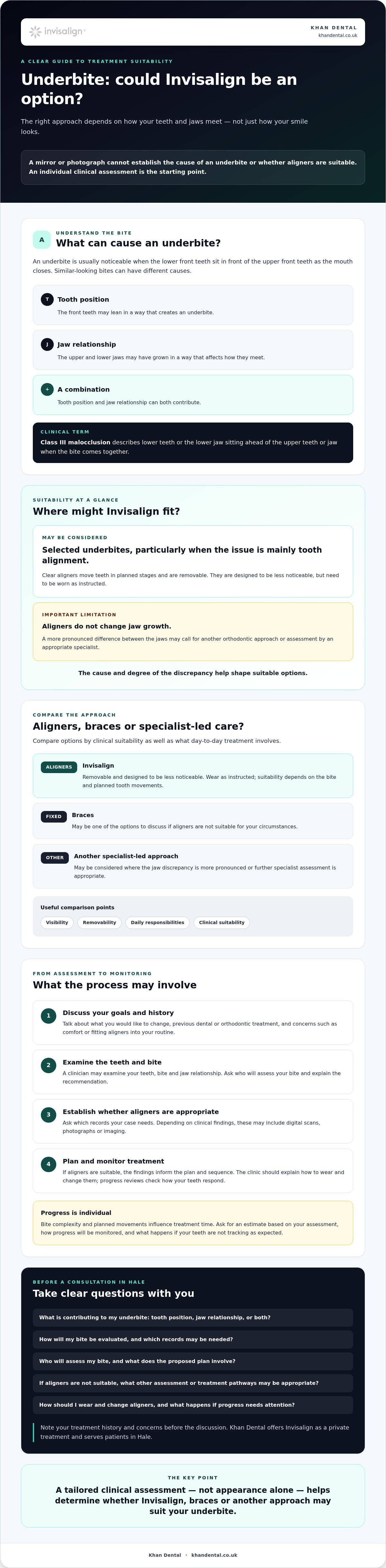
A little preparation can help you leave an assessment with a clearer understanding of your bite and the choices ahead. Before discussing Invisalign for underbite Hale, note what you’d like to change and any concerns about comfort, appearance or fitting treatment around daily life.
Ask what appears to be contributing to your underbite and how that affects the recommended approach. Find out what alternatives may be appropriate, who will assess your bite, what progress reviews involve and what could lead to a change in plan. You can also ask about expected limitations, risks and your responsibilities, in plain language. If aligners aren’t suitable, ask what happens next and whether further assessment is advised.
Confirm directly with the practice whether it can assess your specific bite concern and explain the scope of treatment it provides. Ask about the clinician who would assess or plan your care, including their relevant experience and credentials, rather than relying on a general marketing claim. You can also read this Invisalign treatment overview for broader context.
Check the appointment location, any assessment fees and what is included directly with the clinic. Khan Dental is a private clinic offering Invisalign and serving patients in Hale. Contact the practice to ask whether it can assess your underbite and explain the next steps for your circumstances.
You don’t need to decide on treatment during an initial conversation. Focus on understanding the findings, why a particular option is being proposed and what other pathways might be considered. For a personal enquiry, ask Khan Dental about Invisalign for your underbite.
Choosing a treatment pathway starts with understanding how your bite fits together, what may be contributing to the underbite and how complex the required tooth movements are. An assessment can help establish whether Invisalign is an option to consider or whether another form of advice may be more appropriate. The decision should be based on clinical findings, not appearance alone, and no particular result can be promised in advance.
Khan Dental is a private cosmetic dentistry clinic that offers Invisalign and serves patients in Hale. The clinic also serves patients from Liverpool, Wirral, Manchester, Altrincham, Wilmslow, Knutsford, Southport, Ormskirk and Formby. Contact the team to confirm whether it can assess your specific underbite and explain whether further specialist input may be relevant.
A useful recommendation should explain the clinical reason for your underbite and the treatment goal being considered. If Invisalign is proposed, ask which movements the aligners are intended to achieve and how progress will be reviewed. You should also understand the alternatives, the limitations of the suggested approach, and the responsibilities involved in wearing aligners and following clinical guidance.
Take your time with the explanation. If any part of the plan feels uncertain, ask for it to be clarified in straightforward terms before deciding. You might ask what could affect progress, what would happen if your teeth don’t move as planned, and whether another assessment is recommended. You don’t need to agree to treatment simply because you’ve asked about it.
An enquiry is an opportunity to raise your concerns and find out whether an assessment may be suitable, not a commitment to proceed. Before arranging anything, confirm the clinic’s assessment process, appointment location, any fees and what they include, as well as current availability for Hale patients. You can also check who would assess your bite and whether the practice can advise on your specific concern.
If you’re considering Invisalign for underbite Hale, let the conversation guide your next step: understand the findings, compare appropriate options and decide with clear clinical advice. Discuss Invisalign with Khan Dental.
Whether Invisalign can help an underbite depends on what’s causing it and the movements needed. A clinical assessment can clarify whether aligners may be suitable or whether another approach should be considered. Comparing options and understanding the responsibilities involved helps you make an informed decision without feeling rushed.
If you’re exploring Invisalign for underbite Hale, Khan Dental offers Invisalign as a private treatment and serves patients in Hale and nearby areas, including Liverpool, Wirral, Manchester, Altrincham, Wilmslow, Knutsford, Southport, Ormskirk and Formby. Contact the clinic to ask whether it can assess your specific bite concern and confirm the assessment process, location and appointment details directly with the team.
An enquiry doesn’t commit you to treatment. It’s a chance to ask questions and understand your choices at your own pace. Discuss your Invisalign options with Khan Dental.
Invisalign may help with some underbites, particularly when the issue is mainly tooth position and the planned movements are suitable for aligners. It won’t be right for every bite. A clinician needs to assess how your teeth meet and consider the relationship between your jaws before recommending treatment. An underbite’s appearance alone can’t confirm whether Invisalign is likely to be appropriate for you.
Not necessarily. A more pronounced underbite, especially one involving a significant difference in jaw position, may need assessment beyond cosmetic tooth alignment. Fixed braces, combined specialist-led care or other options might be discussed, depending on the clinical findings. This doesn’t mean surgery is always needed. Ask the clinician to explain the cause of the bite, whether Invisalign could address it and if further specialist advice is appropriate.
It begins with an assessment of your teeth, bite and treatment goals. If aligners are considered suitable, the clinician uses the relevant records to plan tooth movements and explain the proposed treatment. You’ll receive instructions on wearing and changing aligners, with progress checked at planned reviews. The process and timing vary according to your clinical findings, so ask for an individual plan and what could affect its progress.
Neither option is universally better. Invisalign aligners are removable and less noticeable, but need to be worn as instructed. Fixed braces stay on the teeth and may be considered when a different type of tooth movement is needed. The right choice depends on your bite, treatment goals and the clinician’s assessment. Ask why a particular option is recommended, what alternatives exist and what daily responsibilities each involves.
Teeth can shift after orthodontic treatment, so ask how your result will be maintained once active treatment ends. Your clinician can explain whether retainers are recommended, how they should be used and what follow-up may be appropriate. The risk of movement depends on individual circumstances, and no treatment can guarantee that teeth will never change position. Make sure the retention advice is clear before you begin.
Khan Dental is a private clinic that offers Invisalign and serves patients in Hale. If you’re looking into Invisalign for underbite Hale, contact the practice to ask whether it can assess your specific bite concern. Confirm the assessment process, appointment location and current availability directly with the team. An enquiry is a chance to discuss your options, not a commitment to treatment.
Back to Blogs

Schedule a consultation to begin your smile transformation. Our team will assess your needs and create a personalised plan just for you.
Call Us 0151 724 1888
Book a Consultation


