


What if the most important part of a smile makeover happens before any treatment begins? Preparing for a smile makeover starts with understanding what you’d like to change, what you want to preserve and what would help your smile still feel like you. It’s natural to have questions about treatment choices, comfort and timing when you’re considering a change that feels personal.
You don’t need to arrive at a consultation with all the answers. A clear sense of your priorities can help you explain what matters, while thoughtful questions can make the possibilities easier to understand. At Khan Dental in Liverpool, a consultation is an opportunity to discuss your goals and explore options such as Invisalign, veneers, composite bonding or teeth whitening, subject to an individual assessment.
This checklist will help you organise your thoughts, prepare useful questions and understand how a personalised treatment plan is developed. From describing the look you have in mind to asking about appointments, comfort and timing, you can take each step at a pace that feels right and make considered choices without feeling rushed.
Preparing for a smile makeover doesn’t mean arriving with a procedure already chosen. It means getting clear about what matters to you, so you can explain your hopes and concerns to a dentist. Start by noting what you already like about your smile, too. Keeping those features in mind can help you describe a result that feels like a more confident version of you, rather than a completely different smile.
Separate appearance goals from concerns about comfort or oral health. You might be thinking about tooth colour, shape or alignment, while also wanting to mention sensitivity, discomfort or changes you’ve noticed. These are different considerations, and it’s useful to discuss both. A dentist can assess your teeth and gums, explore what may be contributing to your concerns and consider which options, if any, are suitable. Treatment should not be selected on appearance alone.
“I’d like a brighter smile” is a helpful starting point. Make it more specific by noting whether you’re concerned about the colour of particular teeth, uneven edges, spacing, chips, visible wear or tooth shape. You don’t need to know which treatment might address each point. That’s something to discuss after an assessment.
Then rank your priorities. Which change matters most in everyday life? Which features would you prefer to keep as they are? Thinking about how you’d like your smile to look and feel when you speak, smile or see yourself in photographs gives your dentist a clearer picture of your preferences. You don’t have to tackle every concern at once.
A small selection of reference images can help you show what you mean by “natural”, “brighter” or “more even”. Choose examples that illustrate specific details you like, such as tooth shape or overall shade, rather than treating one image as a blueprint. Another person’s result can’t predict your own: your starting point, facial features and clinical needs are individual.
Use images to start a conversation, not to settle the treatment plan. Ask how your preferences might translate into proportions that suit your features, and mention anything that would make you uncomfortable, such as a change that seems too noticeable. The broad range of cosmetic dentistry procedures can be useful to explore, but a dentist must assess your individual needs before recommending an approach.
Clear priorities give you a useful starting point. Bring your notes and images to a consultation with Dr Khan at Khan Dental in Liverpool, where your goals can be considered alongside your dental assessment.
A little preparation can help you use your consultation well, but you don’t need to diagnose a concern or choose a procedure in advance. Bring the information you have, note what you’d like to ask and let the dentist guide the clinical assessment. It’s a conversation, not an exam you need to pass.
Use this short checklist before your appointment:
Even a brief timeline can help: note previous treatment, how your teeth responded and any sensitivity or discomfort you’ve experienced. If you have records or imaging from another practice, take them along if convenient. Don’t worry if you don’t have them. The clinician can advise whether an examination or further information is needed before discussing a plan.
Be open about health conditions and medicines, even if you’re unsure whether they’re relevant. It’s useful to mention dental anxiety, too. Explain what tends to make appointments difficult and ask how the consultation will be approached. These details help the dentist understand your circumstances; they don’t commit you to any particular treatment.
Keep your questions somewhere easy to refer to, such as a note on your phone. Ask which options could address your priorities and why, what their limitations are, and whether there are alternatives. It’s also reasonable to ask about maintenance, the likely sequence of care and how appointments may need to be planned. Answers should relate to your assessment, not a general promise about results.
For background on restorative dental expertise, the American College of Prosthodontists explains why someone might see a prosthodontist. It’s a US organisation, so use this as general information rather than a guide to UK qualifications. If you’re considering a private consultation in Liverpool, you can also learn about Khan Dental and prepare to discuss your questions with Dr Khan.
A treatment list can help you understand what might be discussed, but it isn’t a menu you need to choose from before your consultation. Invisalign, teeth whitening, veneers, composite bonding and crowns serve different purposes. What’s appropriate depends on your teeth, oral health and priorities. Use the comparison below to frame questions, not to diagnose your own needs.
| Your main concern | What to ask the dentist | Points to explore |
|---|---|---|
| Tooth alignment or spacing | Could Invisalign be suitable after an assessment? | Ask what alignment changes may be possible and what the treatment would involve for you. |
| Tooth colour | Could professional teeth whitening address my concern? | Discuss suitability, possible limitations and how to maintain the shade you’re aiming for. |
| Tooth shape, chips or visible wear | Would bonding or veneers be worth considering? | Ask how the options differ, what each may involve and whether either fits your dental needs. |
| A tooth that may need restoration | Should a crown be discussed, or is another approach more appropriate? | Ask what the tooth needs and why a particular option is being recommended. |
Start with the issue you most want to address. If alignment is your priority, ask whether Invisalign may be an option after examination. For colour, discuss whether whitening is suitable for your teeth and expectations. If you’re concerned about shape or damage, ask whether composite bonding, veneers or crowns merit consideration. These treatments aren’t interchangeable, and a dentist can explain which, if any, align with your individual needs.
Khan Dental’s smile makeover guide offers broader context on treatment possibilities. Use it to shape your questions, not to decide on a procedure before your own assessment.
A result you like is only part of the decision. Ask about maintenance, potential limitations, the care involved and how the proposed treatment fits your priorities. If porcelain veneers are raised, read about porcelain veneers and bring any questions about the material or approach to your consultation. If you’re weighing up restoration options, the guide to crowns versus veneers can help you prepare to discuss how their purposes differ.
Preparing for a smile makeover means understanding the reasoning behind a recommendation as well as considering how it may change your smile. Ask why an option suits your needs, what alternatives could be considered and what the next steps would involve. You can take time to reflect before making a decision.
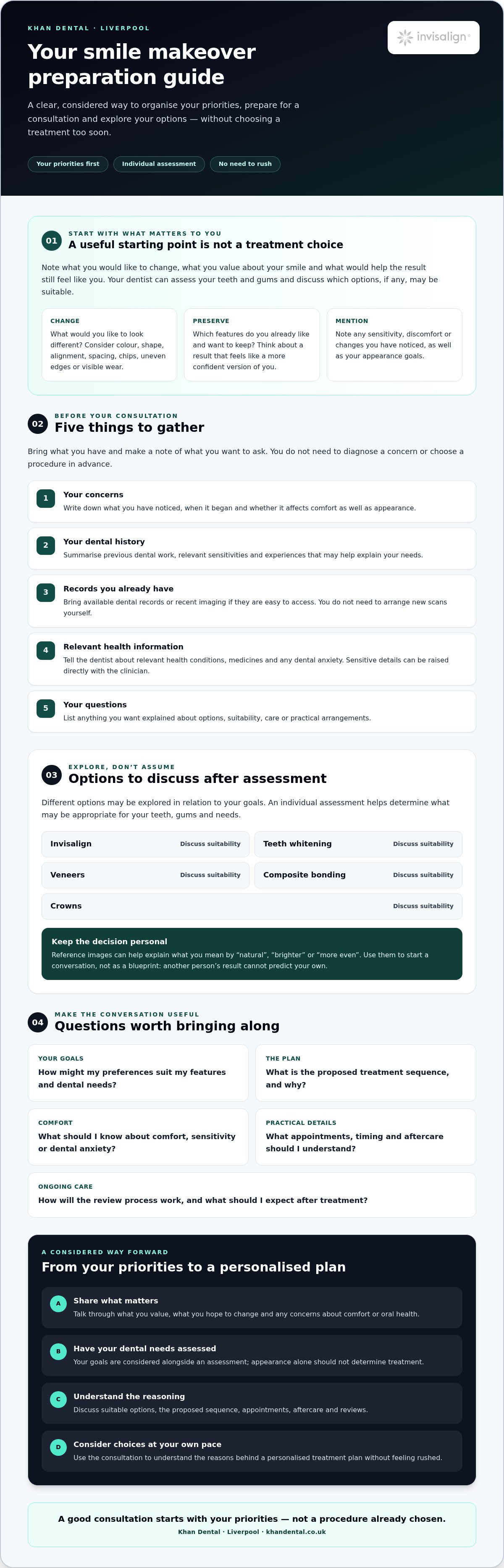
A consultation should give you room to understand the possibilities, not pressure you to decide on the spot. Use this checklist to keep your priorities in view before, during and after the conversation. Preparing for a smile makeover also means considering how a proposed plan might fit your routine and what would help you feel comfortable.
Ask the dentist to explain the purpose of each step in plain language. If the plan includes more than one treatment, find out why that sequence is suggested and whether alternatives could meet your priorities. You can also ask which details depend on further assessment, what limitations may apply and how progress would be reviewed. Clear answers help you make an informed choice. You’re entitled to ask for clarification or time to think.
Before you leave, make sure you know whom to contact if you remember another question later. If anything feels unclear, ask for it to be explained again. A thoughtful decision is more valuable than a rushed one.
Share any work, family or travel commitments that may affect appointment planning, then ask what arrangements may be needed for the specific treatment being considered. Preparation and aftercare can differ, so ask the clinician for advice relevant to your proposed plan rather than relying on general assumptions. If you feel nervous, say so early. You can ask what support is available and request explanations at a pace that feels manageable.
Once you’ve had time to reflect, you can explore Khan Dental’s care and consider whether a conversation about your goals feels like a helpful next step. There’s no need to arrive with every decision made.
You’ve already done useful groundwork by defining what you’d like to change, gathering relevant information and noting the questions you want answered. Now you can bring those priorities to a conversation with a dentist, listen to their advice and take time to consider it. Preparing for a smile makeover is about making your preferences clear, not arriving with a treatment decision already made.
A consultation is an opportunity to discuss your concerns, have your oral health assessed and explore which options may be suitable for you. At Khan Dental in Liverpool, Dr Khan leads care across cosmetic and restorative treatments including Invisalign, professional teeth whitening, porcelain and 3D veneers, composite bonding, dental crowns and smile makeovers. These are possibilities to discuss, not recommendations made in advance. Your needs and clinical assessment inform whether a particular option is appropriate.
A considered plan should reflect both your dental needs and your preferences. Explain what matters most, ask why an approach is being suggested and discuss alternatives. The clinician can also clarify what further assessment may be needed. Recommendations and likely outcomes depend on professional assessment, so no treatment or result should be assumed before that conversation.
You don’t have to make a decision during your first discussion. Take time afterwards to review what you’ve been told, consider how the options fit your priorities and write down any follow-up questions. If something isn’t clear, ask for a simpler explanation or clarification of the alternatives. Feeling informed matters more than moving quickly.
If you’re nervous, let the practice know what would help you feel at ease. You can also ask what to expect from the consultation and whom to contact if questions arise later. An enquiry is simply a way to start a conversation; it doesn’t commit you to treatment.
Khan Dental is in Liverpool, and people considering a smile makeover can make an enquiry from Liverpool and nearby areas including the Wirral, Manchester, Altrincham, Wilmslow, Knutsford, Hale, Southport, Ormskirk and Formby. When you feel ready, you can contact Khan Dental to discuss a personalised consultation. Bring your priorities and questions, and let the conversation establish what may suit your individual needs.
Preparing for a smile makeover is about making your priorities clear, not deciding on treatment before you’ve had professional advice. Bring your questions, relevant dental history and a sense of what you’d like to preserve as well as change. Then use your consultation to understand which options may suit your needs and why.
At Khan Dental, a private Liverpool practice led by Dr Khan, potential options include Invisalign, veneers, composite bonding, teeth whitening and crowns. Their suitability depends on an individual assessment, so you can discuss your goals without assuming a particular treatment is right for you. Take time to review the advice and ask for clarification before deciding what feels right.
If you’re ready to explore your options, arrange a conversation about your smile goals with Khan Dental. A considered plan begins with an open discussion, and you can take each next step at a pace that feels comfortable.
Prepare by noting what you’d like to change, what you already like about your smile and any concerns about comfort or oral health. Bring a short summary of relevant dental history, previous treatment and medicines, along with questions you want answered. You don’t need to choose a procedure first. This preparation can help you explain your priorities clearly and make the most of a conversation with a dentist in Liverpool.
Ask what each recommended treatment is intended to achieve and why it may suit your needs. Find out whether alternatives are available, what limitations to consider, and what preparation, appointments, maintenance or aftercare may be involved. You can also ask what needs further assessment, how progress will be reviewed and whom to contact with later questions. If an explanation isn’t clear, ask for clarification and take time to consider the information before deciding.
You can research treatments and bring your preferences to a consultation, but it’s best not to settle on a procedure before a dentist assesses your individual needs. Similar concerns can have different causes, and treatments aren’t interchangeable. Explain what you hope to change, such as colour, spacing or tooth shape, then ask which options may be appropriate and why. The discussion can help you understand the possibilities without feeling you need to arrive with a decision made.
A smile makeover isn’t automatically suitable for everyone, and the right approach depends on an individual dental assessment. Your dentist can discuss your goals, examine your oral health and consider whether cosmetic or restorative options are appropriate. They may explain that certain concerns need attention before aesthetic treatment is considered. Suitability, recommendations and likely outcomes vary from person to person, so a consultation is the best way to understand what may be possible for you.
There isn’t one set timeframe for every smile makeover. The overall schedule depends on your individual assessment, the treatments being considered and the sequence recommended by your dentist. During your consultation, ask what stages may be involved, how appointments could be planned and what factors might affect timing. Khan Dental can discuss these details for your circumstances in Liverpool, but a timeframe should be based on the proposed plan rather than assumed in advance.
Bring any dental records or recent imaging you already have, plus a note of previous treatment, current concerns and relevant sensitivities. It can also help to list medicines, health conditions and questions you’d like to discuss. A few reference images may help you explain your preferences, but they don’t predict your result. Don’t worry if you can’t gather everything beforehand; the dentist can advise whether further records or an examination are needed.
In some cases, a dentist may consider more than one treatment as part of an individual plan, but combining Invisalign, veneers and composite bonding won’t be suitable for everyone. The clinician needs to assess your teeth, oral health and goals before advising whether these options should be considered together or in a particular sequence. Ask what each treatment would contribute, what alternatives exist and what care may be involved before deciding.
Back to Blogs

Schedule a consultation to begin your smile transformation. Our team will assess your needs and create a personalised plan just for you.
Call Us 0151 724 1888
Book a Consultation


