

Whitening results have no fixed expiry date. How long they remain visible depends on your oral-care routine and exposure to staining foods, drinks and smoking. At a teeth whitening clinic in Wirral, you can discuss what may affect your results and how to care for your smile afterwards.
It’s natural to want a brighter smile that still feels like you, and to wonder how long the change will last. This guide explains professional whitening, why a dental assessment matters and which everyday habits can help maintain your results. You’ll also learn why whitening changes the shade of natural teeth, but not crowns or bridges, so you can approach treatment with a clearer idea of what to expect.
Professional in-chair whitening is carried out at a dental appointment. Results have no fixed lifespan: staining habits and daily oral care influence how long the brighter shade remains visible.
At-home whitening follows a different routine. Results can begin to show within a week, while the full process depends on your dentist’s instructions and how you use the custom trays. The trays hold whitening gel against your teeth, so careful placement and consistent use are important.
Start with an assessment by a dentist. They’ll consider your teeth and the result you hope to achieve before recommending an approach. Use the appointment to discuss existing dental work, previous sensitivity and your preferred shade. A clear plan also distinguishes natural teeth from restorations, which respond differently to whitening.
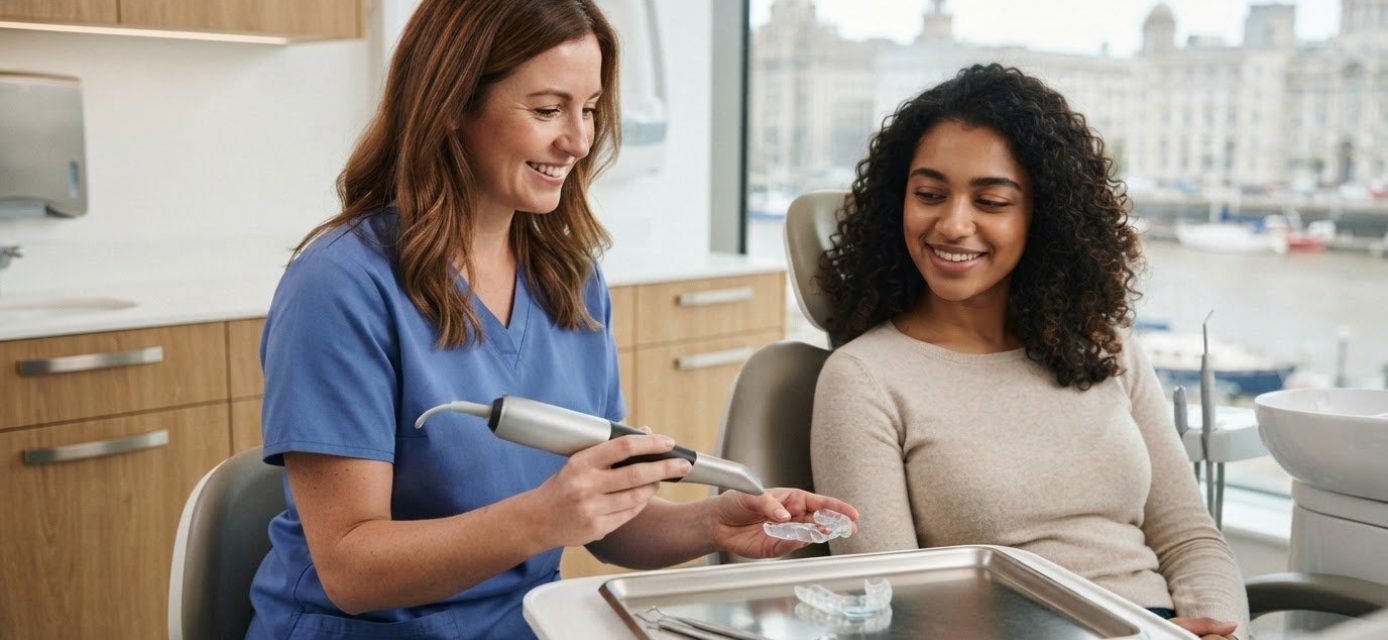
For at-home treatment, custom digital scans can help shape trays to your mouth. A dentist may use a handheld scanner to take detailed 3D images during the consultation. These images provide a digital view of your teeth, supporting the design of trays made to fit your mouth rather than relying on a generic shape.
At-home whitening uses custom-made trays with dentist-provided gel. Follow the directions for applying the gel and wearing the trays. Adding extra gel or changing the routine won’t replace the planned treatment. If a tray feels uncomfortable, note where, such as around one tooth, and tell your dentist.
Everyday choices can affect how long whitening results last. Red wine can stain teeth, as can other strongly coloured foods and drinks. Regular brushing and flossing help remove plaque build-up, while rinsing your mouth or drinking water after eating can help clear residue.
Whitening changes the shade of natural teeth, but not crowns or bridges. If a visible crown sits beside natural teeth, the colour difference may become more noticeable after treatment. Discuss the restoration during your assessment to understand what whitening can and can’t change.
When comparing the two approaches, consider the appointment pattern. In-chair treatment takes around three hours in one visit, while at-home whitening uses custom trays and can begin showing results within a week. Your dentist can explain the steps and how habits such as drinking red wine may influence how long results remain visible.
Whitening results have no fixed lifespan. Daily care and exposure to staining foods, drinks and smoking all affect how long the shade lasts. Aftercare is part of treatment, and small everyday habits can help limit new stains.
Whitening lightens natural teeth, but not crowns or bridges. If a crown sits beside natural teeth, compare their colours when considering the overall result. The difference may become more noticeable after whitening, so include visible dental work when assessing the change you want.
A shade can look less bright as new stains build up. Coffee, red wine, curry and berries can stain teeth. The effect depends on how often they feature in your routine, so consider what you regularly eat and drink when planning how to maintain your results.
Keep a consistent oral-care routine. Brushing twice a day with fluoride toothpaste and flossing help remove plaque build-up. Plaque attracts stains, so cleaning between teeth matters too. Use a gentle, thorough technique rather than scrubbing harder, and maintain the routine after treatment.
Food and drink choices can influence how quickly stains return. You don’t need to treat every meal as a risk, but take note of regular sources such as coffee, red wine, curry and berries. Rinsing your mouth or drinking water within thirty minutes of eating helps clear residue.
Smoking can also affect the appearance of a whitened smile. Avoid smoking for at least 24 to 48 hours after treatment, then consider how ongoing smoking may contribute to staining. This gives you a clear aftercare step to follow immediately, while highlighting a habit that can affect the shade over time.
Whitening toothpaste or mouthwash may help keep your smile looking fresh and bright. Use these as part of your normal routine, not as a reason to change treatment instructions or apply extra whitening gel. If you use custom trays, follow your dentist’s directions rather than extending wear yourself.
Maintaining results is about combining these steps: brush twice a day, clean between teeth, and rinse or drink water within thirty minutes of eating. Limiting frequent staining foods and drinks, alongside avoiding smoking for at least 24 to 48 hours after treatment, can help preserve the shade achieved.
A patient case study says Richard’s results remained amazing more than a decade later. McGrath Dental advises limiting curry, berries, coffee and red wine, which can stain teeth.
Teeth whitening is a cosmetic treatment that lightens the colour of natural teeth. A dentist assesses your starting shade and oral health, then explains whether whitening suits your goal. It won’t change crowns or bridges or replace a missing tooth. This distinction matters if your smile includes restorations, veneers or gaps.
In the UK, a dentist can provide teeth whitening, or a dental hygienist or therapist can do so under a dentist’s prescription and supervision. A consultation lets the dental professional assess your mouth, explain the proposed treatment and discuss possible effects. Make sure you know who is responsible for your care before treatment begins at a trusted teeth whitening clinic Wirral.
Suitability depends on the condition of your teeth and gums, existing dental work and the cause of discolouration. A dentist can identify issues such as untreated decay or inflamed gums that need attention before whitening. If you have veneers, crowns or bridges, discuss them during the consultation: whitening changes natural teeth, not restorations.
Possible side effects include temporary tooth sensitivity and irritation where whitening gel contacts the gums. Sensitivity may feel sharper with cold drinks or when brushing, while gum irritation can cause soreness around tray edges. Tell the dental professional what you’re experiencing and where, so they can advise on the next step.
Follow the treatment instructions rather than adding extra gel or extending tray wear. If sensitivity develops during at-home whitening, pause and seek advice from the supervising dental professional before resuming. This helps distinguish a temporary response from discomfort linked to another dental problem, such as a damaged tooth or untreated decay.
Whitening has limits. A dark tooth may have a different cause from general staining, so an assessment can clarify what treatment may address. If a front tooth has a crown, whitening the surrounding natural teeth won’t lighten the crown to match. A dentist can explain the difference before you decide.
Bring specific concerns to your consultation at Khan Dental, such as sensitive teeth, existing veneers or a visible crown. Ask how treatment will be applied, what sensations to expect and what to do if your gums feel sore. Clear answers help you understand the steps and decide whether whitening suits your dental needs.
To help preserve your bright results after visiting a teeth whitening clinic Wirral, simply maintain a consistent oral hygiene routine. Brushing twice a day with fluoride toothpaste effectively removes surface plaque and helps prevent new stains from forming, ensuring your smile remains radiant for as long as possible.

A dental check-up gives the dentist a starting point before cosmetic whitening. Discuss your preferred shade, previous whitening and any concerns about sensitivity. Mention visible crowns or bridges too, because whitening changes natural teeth but not those restorations. This conversation helps set realistic expectations for how your smile may look afterwards.
The assessment also gives you time to describe changes you’ve noticed. Explain, for example, if one tooth looks darker than its neighbours or a particular area feels uncomfortable. These details help the dentist understand what you want to change and consider whether whitening is suitable. A general difference in shade and a single dark tooth may have different causes.
Discuss existing dental work before agreeing to a treatment plan. A crown, bridge or filling won’t whiten alongside natural teeth, so its position can affect the overall appearance. If a front crown is prominent, ask how its shade may compare with surrounding teeth after whitening. This practical discussion helps you weigh the cosmetic result before starting.
Use the appointment to describe your oral-care routine and any past reactions to whitening. If cold drinks have caused sensitivity, explain when it happens and which teeth are affected. The dentist can consider this alongside your preferred result. Avoid starting whitening independently before this conversation, particularly if the reason for a colour change is unclear.
A clear sequence helps: describe your goal, identify visible restorations, and discuss discomfort or previous treatment. The dentist can explain the proposed approach and how to use custom trays and gel if at-home whitening is planned. Ask what to do if a tray feels uncomfortable or sensitivity appears, so you know the next step before treatment begins.
It’s also worth discussing the limits of cosmetic treatment. Whitening lightens natural tooth colour; it doesn’t replace a missing tooth or change a crown’s shade. If your concern is a gap or restoration rather than general staining, explain that specifically. The dentist can clarify what whitening may address and what needs a different discussion.
In England, teeth whitening is not typically funded by the NHS because it’s considered cosmetic treatment. A check-up before whitening helps clarify the dental and aesthetic considerations. Leave with a plan covering your intended shade, existing dental work and instructions for your chosen treatment, rather than relying on a general expectation of a particular result.
Professional teeth whitening starts with an assessment and a choice between in-chair treatment and dentist-provided home whitening. The right approach depends on your schedule, dental work and preferences.
When choosing a teeth whitening clinic in Wirral, look for a clear consultation process, an assessment before treatment and an explanation of how whitening affects natural teeth. Ask who will carry out your treatment and whether they’re registered with the General Dental Council. Registration relates to the individual professional, so the clinic name alone doesn’t establish the treating person’s status.
Use the consultation to discuss your preferred shade, existing crowns and any previous sensitivity. A useful explanation covers the treatment steps, how to follow instructions and what whitening can change. It can lighten natural teeth, for example, but won’t alter crowns or bridges. That distinction helps you judge whether the expected change suits your smile.
In-chair whitening can be completed in one appointment of around three hours. Dentist-provided home whitening uses custom trays and gel, and results can begin to show within a week. The approaches differ in timing and routine: one concentrates treatment in an appointment, while the other involves following instructions at home.
Consider which approach fits your everyday life. If you prefer treatment in one visit, ask what the in-chair appointment involves. If home whitening feels more practical, discuss how to use the trays and gel correctly. Both approaches affect natural tooth colour, so include any visible crowns in the conversation before choosing.
To book with a teeth whitening clinic in Wirral, use the clinic’s appointment route and request a whitening consultation. Briefly mention your main concern, such as general staining, a darker front tooth or visible crowns. Sharing this beforehand helps focus the conversation on the change you want, without assuming whitening addresses every concern in the same way.
At the consultation, be ready to discuss your preferred shade, dental work and any sensitivity. Ask the dentist whether in-chair treatment or home whitening better fits your circumstances. You can also ask what the appointment involves and what instructions apply to your chosen approach. These questions give you practical details before you decide whether to proceed.
If you’re ready to discuss your options, book a whitening consultation to explore the approach that suits your smile.
Khan Dental offers Teeth Whitening for patients seeking a brighter natural tooth shade, and Invisalign® aligners for those considering changes to tooth alignment. Whitening affects natural teeth, while crowns and other restorations retain their existing colour. An assessment can help clarify how these treatments relate to your smile goals.
If your main concern is alignment rather than tooth colour, Invisalign® aligners may be a more relevant starting point. For concerns about restorations or tooth shape, Porcelain Veneers and Dental Crowns are also available. The right discussion depends on what you’d like to change and the condition of your teeth.
Contact Khan Dental to discuss your smile goals and possible next steps.
A brighter smile is personal. Before taking the next step, consider what you’d most like to change: the overall shade, the appearance of particular teeth or their alignment. That priority can guide a more useful conversation at a teeth whitening clinic in Wirral, focusing on the result that matters in everyday life rather than an arbitrary ideal.
Khan Dental offers Teeth Whitening, Porcelain Veneers and Invisalign® aligners. These treatments address different aesthetic concerns, so a useful discussion starts with your goals and the features you’d like to improve. Talk through your preferences to understand which approach may suit your smile; you don’t need to have every decision made in advance.
A considered conversation can turn uncertainty into a clear next step. Whether you’re exploring a brighter shade or weighing other changes to your smile, contact Khan Dental to discuss teeth whitening. Take the time you need, and move forward when the plan feels right for you.
Smoking doesn’t automatically rule out whitening, but it can contribute to staining and affect how long the shade stays bright. Dentists often recommend avoiding smoking for at least 24 to 48 hours before treatment, and avoiding it for at least 24 to 48 hours afterwards. Tell the dentist you smoke during your assessment, so this habit can be considered when discussing your treatment and aftercare.
Yes. See a dentist before starting whitening so your teeth and gums can be assessed and a suitable approach discussed. Mention any sensitivity, dental work or particular tooth that concerns you. Ask how treatment is applied, who supervises it and what instructions to follow. This gives you a clear plan before using whitening gel or trays.
Whitening can lighten natural teeth, but the change depends partly on the cause and position of discolouration. Ask the dentist to assess a specific mark, such as a darker tooth beside the others, rather than assuming every stain will respond in the same way. Whitening won’t alter crowns or bridges, which may remain a different shade.
Options can include in-chair whitening and dentist-provided home whitening. In-chair treatment takes around three hours and can be completed in one appointment; home whitening uses dentist-provided trays and gel, with results able to begin showing within a week. Khan Dental offers Teeth Whitening. A consultation can help you understand which approach fits your needs and routine.
Possible side effects include temporary tooth sensitivity or irritation where gel touches the gums. Before treatment, tell the dentist about existing sensitivity or sore areas, and ask what to do if discomfort occurs. Follow the instructions for applying gel and wearing trays rather than changing the routine yourself. If discomfort persists or concerns you, contact the dentist for advice before continuing treatment.
Back to Blogs

Schedule a consultation to begin your smile transformation. Our team will assess your needs and create a personalised plan just for you.
Call Us 0151 724 1888
Book a Consultation


